
Think about what it would take to replace a car title, a property deed, or a child's birth certificate. Now picture doing it after a house fire, a flood, or a break-in.
Some items are a hassle to replace. Others, like family heirlooms and family keepsakes, can't be replaced at all. A safe deposit box gives those items a secure place to stay outside your house, and it can be one of the simplest ways to protect valuables you'd hate to lose.
Below, we'll walk through the most practical safe deposit box benefits, what belongs inside a box, what should stay somewhere else, and a few tips for storing valuables the right way.
Key Takeaways
-
A safe deposit box keeps important documents and irreplaceable items in a bank vault, away from household risks like theft, fire, and water damage
-
Only authorized people can open the box, giving you privacy and control over access
-
Items you may need on short notice, such as passports and living wills, are usually better kept at home
-
Safe deposit box contents are not FDIC insured, so an inventory and the right insurance coverage still matter
-
Cash generally belongs in an insured savings account, where it can earn interest, rather than in a box
What a Safe Deposit Box Is and How It Works
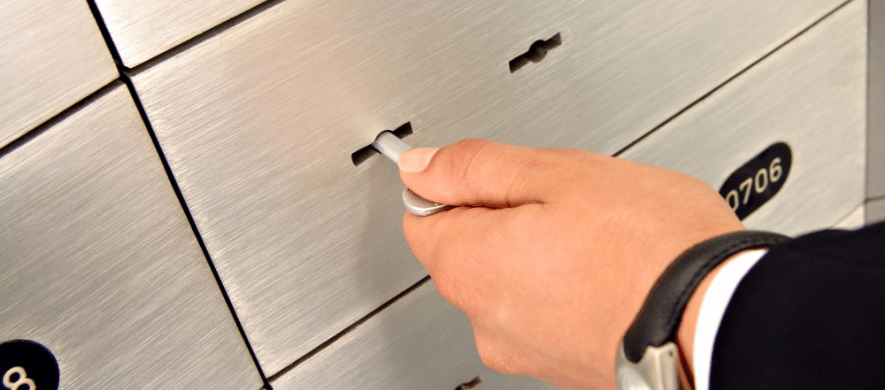
A safe deposit box is a locked container you rent from a bank and keep inside the bank's vault. Many financial institutions offer them in several sizes. You choose a box, pay an annual rental fee, and receive a key. At many banks, opening a box takes two keys: yours and one held by the bank. Neither one works alone.
When you visit, a banker verifies that you're authorized before giving you access. From there, you can personally add, remove, or review your items.
Security Away From Home
Most homes hold more valuables than people realize. Jewelry passed down for generations. Savings bonds tucked in a dresser drawer. The title to a truck or the deed to the family property.
Home safes can help, but thieves can carry off a small one during a burglary, and not every model holds up well in a fire. Some people hide cash or jewelry in a closet or freezer, spots experienced burglars know to check. A bank vault is designed to keep its contents secure, with controlled access and monitoring.
Storing items in a separate location also spreads out your risk. If something happens to your home's contents, your most important papers are somewhere else. For many families, that peace of mind is one of the biggest safe deposit box benefits, much like keeping a backup of digital files in a second place.
Privacy and Control Over Who Has Access
Only people authorized on the box can open it, and you decide who that is. Some renters keep the box in their name alone. Others add a spouse, adult child, or business partner so someone they trust can reach important items when needed.
It's worth planning ahead. If you're the only authorized person and something happens to you, family members may need to go through a legal process before they can open the box, and the rules depend on state law and the circumstances. A short conversation with your banker, and possibly an estate planning attorney, can help you set things up the way you intend.
What to Keep in a Safe Deposit Box
The best candidates are important papers and other valuables that are hard to replace and don't require frequent access. Common examples include:
-
Birth certificates, marriage licenses, and adoption papers
-
Military records and discharge papers
-
Property deeds, car titles, and land contracts
-
Savings bonds and paper stock certificates
-
Family heirlooms, stamp collections, collectible coins, and fine jewelry
-
Important business papers, such as partnership agreements and equipment titles
-
Backup drives holding family photos or other important paperwork
Your Social Security card is another good fit. There's little reason to carry it in your wallet, where it could be lost or stolen.
For farm and ranch families, a box can be a good home for original land documents and equipment titles that would take time and effort to recreate.
What to Keep Somewhere Else
Bank vaults keep business hours. Emergencies don't. Anything a person might need on a weekend, during travel, or in a medical situation is usually better kept at home in a fire-resistant safe or with someone you trust. That often includes:
-
Passports you may need for upcoming travel
-
Advance medical directives and living wills
-
Durable powers of attorney
-
Your original will, unless your attorney recommends otherwise
-
Cash you might need on short notice
Illegal or hazardous items should never go in a safe deposit box. It also helps to limit the box to things you truly need to protect, so it stays organized and easy to review.
How Insurance Works for Safe Deposit Boxes
Many people assume everything inside a bank is FDIC insured. That isn't the case. According to the FDIC, safe deposit box contents are not covered by deposit insurance, since a box is storage space rather than a deposit account.
Vaults are built for security, but natural disasters like a major flood can still happen. A little preparation goes a long way:
-
Ask your insurance agent whether your homeowners or renters policy can insure items stored off-site, or whether a rider makes sense
-
Seal paper documents and photos in a waterproof bag before placing items in the box to help guard against water damage
-
Use your phone to photograph each item, and keep that inventory somewhere other than the box itself
-
Keep cash in an insured savings account instead of the box, where it can earn interest and standard FDIC coverage is $250,000 per depositor, per insured bank, per ownership category
Is a Safe Deposit Box Worth It?
Start by comparing the cost of the box to the cost of losing what's inside. Rental fees are based on box size and billed annually, so a small box holding a handful of important documents may cost less than you'd expect.
Then ask yourself a few questions. How long would it take to replace these documents? Could any of these items be replaced at all? Would my family know where to find them? If those answers leave you uneasy, it may be time to rent a box and rest a little easier.
Talk With a Local Banker About Protecting Your Valuables
The right storage plan depends on what you own, who needs access, and how often you'll need it. Farmers Bank offers safe deposit boxes for both personal and business customers in a range of sizes, and our team can walk you through annual fees, access options, and what to expect when you visit.
Stop by your nearest Farmers Bank branch, reach us by phone at 208-734-1500, or explore our safe deposit box options to find a secure spot for the things that matter most.
FAQs
How much does it cost to rent a safe deposit box?
Pricing depends on the size of the box you choose, and rental fees are billed annually. Your local Farmers Bank branch can share current sizes and rates, or you can review them on our safe deposit box page.
Who can access my safe deposit box?
Only the individuals authorized on the box can open it. If you'd like a family member or business partner to have access, talk with a banker about adding them.
Are safe deposit box contents insured?
No. Safe deposit box contents are not insured by the FDIC or by Farmers Bank. For added protection, check with your insurance agent to see whether your homeowners or renters policy can cover items stored at the bank.
What happens if I lose my safe deposit box key?
Contact your branch as soon as possible. Depending on the situation, a replacement key, lock change, or box drilling may be required, and fees may apply. Store your key somewhere secure at home rather than on your everyday key ring.
When can I get into my safe deposit box?
You can access your box during Farmers Bank's regular business hours. Plan ahead for anything you may need on evenings, weekends, or holidays.
Should I keep cash in a safe deposit box?
Before putting cash in a box, consider a savings account or another deposit account instead. Cash in a safe deposit box isn't insured and won't earn interest, while deposits at an FDIC-insured bank are protected up to applicable limits.