
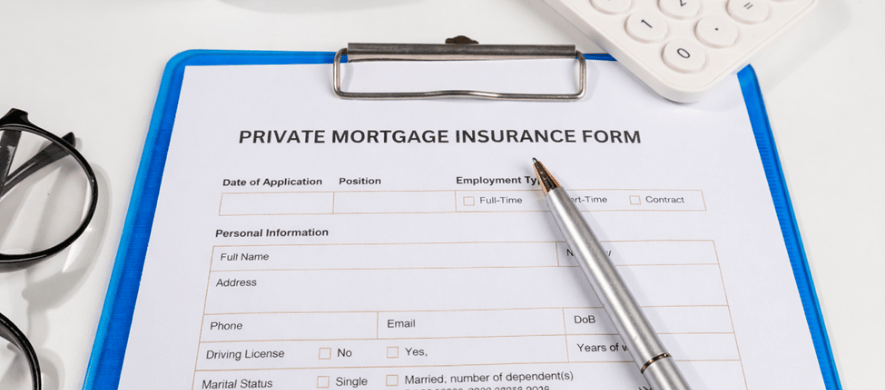
You review your monthly mortgage payment and notice a line item labeled PMI. It raises a fair question: what is PMI, and why are you paying it?
For many homeowners, private mortgage insurance shows up during the homebuying process when a smaller down payment makes sense. The key is understanding how it works and knowing when you can remove PMI.
Key Takeaways
-
Private mortgage insurance protects the lender, not the borrower.
-
PMI is typically required on conventional loans with a low down payment.
-
The average PMI cost ranges from $30 to $70 per $100,000 borrowed each year.
-
You can request cancellation once your loan balance reaches 80% of the original appraised value.
-
Refinancing or home appreciation may help you remove PMI sooner.
What Is PMI and Why Does It Exist?
So, what is PMI in plain terms?
Private mortgage insurance is coverage that protects the lender against loss if the borrower fails to make loan payments. PMI protects the lender; it does not protect the borrower and it does not prevent foreclosure if mortgage payments are missed.
Lenders require PMI on a conventional mortgage when the down payment amount is less than 20 percent of the home’s purchase price. A smaller down payment increases the lender’s risk. Private mortgage insurance reduces that risk and allows buyers to secure a home loan sooner.
This requirement can also apply when you refinance. If you refinance a conventional loan and your equity is less than 20 percent, lenders may require PMI again.
How Much Does PMI Cost?
Homeowners often ask, how much does PMI cost?
The average annual PMI cost typically ranges from $30 to $70 per $100,000 borrowed. The exact PMI depends on several factors, including your credit score, loan amount, loan terms, and LTV ratio.
Most borrowers pay PMI through monthly premiums added directly to the monthly mortgage payment. These borrower-paid PMI premiums become part of your regular mortgage payment.
There are other structures too:
-
Single-premium PMI requires a one-time up front payment at closing.
-
Split-premium mortgage insurance involves a larger upfront premium combined with lower monthly premiums.
-
With lender-paid PMI, the lender covers the insurance but you pay a higher interest rate.
Each option changes your payment amount and long-term costs. Your loan officer can walk you through which structure the lender offers and how it affects your personal finance strategy, and you can run the numbers yourself with our mortgage qualifier calculator.
When Does a Loan Require PMI?
Conventional loans require PMI when the down payment is below 20 percent. FHA loans operate differently; an FHA loan requires a mortgage insurance premium structured under Federal Housing Administration guidelines. USDA loans require a guarantee fee. A VA loan backed by Veterans Affairs includes a funding fee instead of traditional private mortgage insurance PMI.
Understanding these distinctions matters. Mortgage insurance is not one-size-fits-all.
If you want to avoid PMI entirely on a conventional mortgage, you can make a 20 percent down payment. Some buyers consider a piggyback loan, often structured as an 80-10-10 second mortgage, to avoid PMI without bringing the full 20 percent down in cash.
How to Remove PMI
For most homeowners, the goal is simple: remove PMI as soon as possible.
You can request PMI cancellation once your principal balance reaches 80 percent of the original value of your home. Lenders must automatically cancel PMI at 78 percent of the original appraised value, provided you are current on loan payments.
To request cancellation, contact your loan servicer and submit a formal request PMI cancellation form. The lender may require proof of the current value through an appraisal or broker price opinion.
You may qualify sooner if your home has appreciated significantly. To calculate your equity, subtract your mortgage balance from the value of your home. If the LTV ratio falls below 80 percent based on the current value, you may be able to cancel PMI earlier.
Can Refinancing Help Remove PMI?
Refinancing can be another path to remove PMI.
If your current mortgage balance is low enough relative to the home’s value, a refinance into a new conventional mortgage without private mortgage insurance may be possible. Keep in mind that refinancing comes with closing costs and should be evaluated carefully.
You should compare your current loan terms, interest rate, and remaining balance against new loan options, using tools like a mortgage refinance calculator to estimate potential savings. In some cases, refinancing also allows you to adjust from an adjustable rate mortgage to a fixed rate structure, creating more predictable monthly payments.
What About Taxes and Other Costs?
Some homeowners wonder if PMI tax deductible benefits apply. Tax treatment can change, so it is best to consult a tax professional for current guidance.
Also remember that PMI is separate from homeowners insurance and property taxes. All three may appear in your monthly mortgage payment, but they serve different purposes.
Ready to Review Your Mortgage?
If you are paying private mortgage insurance and wondering whether you can remove PMI sooner, we can help. At Farmers Bank, our mortgage specialists will review your mortgage balance, loan terms, and current value to determine your options.
Sometimes a quick equity review reveals opportunity. Contact your local Farmers Bank loan officer today and let’s take a closer look at your mortgage.
FAQs About Private Mortgage Insurance
What is PMI and who does it protect?
Private mortgage insurance protects the lender if you stop making loan payments. It does not protect you as the borrower.
How can I request cancellation of PMI?
You can request cancellation once your loan balance reaches 80 percent of the original appraised value. Contact your loan servicer and submit a formal request if you meet the requirements.
Does refinancing require PMI again?
Yes. If you refinance a conventional loan and your equity is below 20 percent, lenders may require PMI on the new mortgage loan.
Can I avoid PMI altogether?
You can avoid PMI by making a 20 percent down payment on a conventional loan. Some buyers explore piggyback loan structures to reduce or eliminate the need for PMI.
How do I know if I am still paying PMI?
Review your monthly mortgage payment breakdown. If you see PMI premiums listed, you are currently paying private mortgage insurance.